
On this page
What storms do to gutters here
Duluth Gutter Group connects callers with independent local gutter contractors, who give the estimates and do the work. Gwinnett sees a steady run of severe thunderstorms and the remnants of tropical systems. When Irma crossed in September 2017, Gwinnett authorities answered dozens of calls about downed trees and wires and tens of thousands lost power. In September 2024, Helene brought gusts of 50 to 100 mph to parts of east and central Georgia and heavy rain across the north, and trees came down on homes across the county.
| Storm effect | Gutter damage |
|---|---|
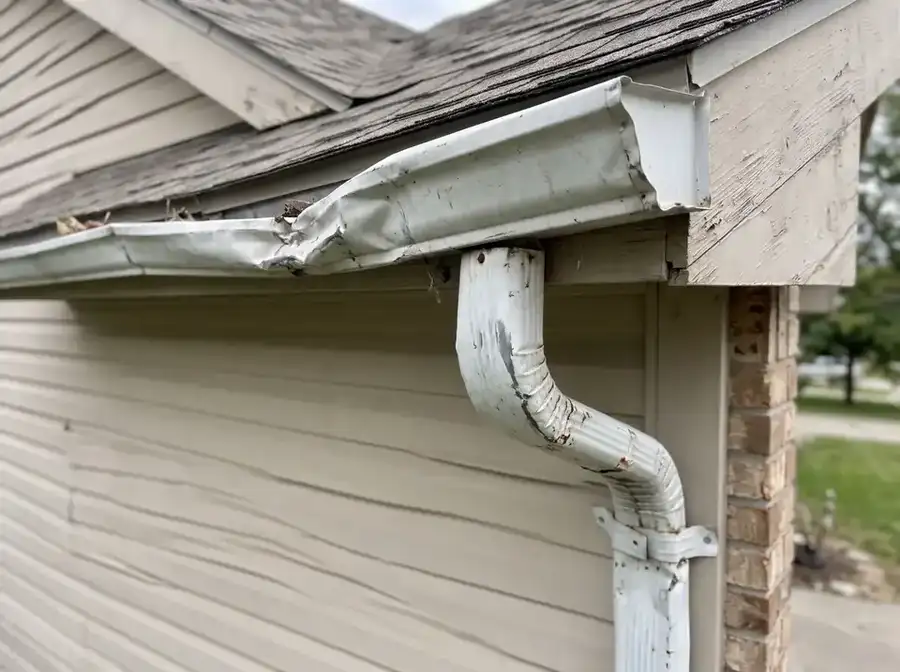
| Falling limbs | Creased runs, torn sections, crushed downspouts |
| High wind | Runs lifted, hangers pulled |
| Heavy rain | Overflow; leaks at weak joints |
| Hail | Dents |
| Ice | Weight pulls gutters down; see ice damage |
What to do after a storm
- Stay safe. Keep away from downed lines.
- Photograph the damage from the ground.
- Call your insurer before signing anything.
- Get written estimates.
- Keep receipts for any emergency work.
Georgia's rules on storm contracts
The Georgia Attorney General's consumer office advises getting three written bids, paying no more than a third up front, and being wary of anyone who offers to cover your insurance deductible or knocks on the door after a storm. Since July 1, 2025, a contractor signing a contract within a year of a natural disaster may not take an assignment of your insurance proceeds and must give you a notice of cancellation.
Repair or replace after a storm?
| Damage | Usually |
|---|---|
| One run creased | Replace that run |
| Runs pulled loose, not bent | Re-hang |
| Downspouts crushed | Replace sections |
| Damage on most of the house | Replace the system |
| Old gutters already failing | Replace; insurance may cover only the storm part |
Temporary fixes
If a gutter is hanging loose and could fall, a contractor can take it down or secure it. A torn-off downspout pouring against the foundation can be turned away with a temporary extension.
Trees and future storms
After a storm, look at the trees too. A cracked limb may come down in the next one. An arborist's view of big limbs over the roof is worth having.
Inspecting after a storm
From the ground, look along each run for bends, gaps where the gutter has pulled away, loose downspouts and limbs on the roof. Use binoculars for second-story runs. Do not climb onto a wet roof or near a damaged line. A contractor's inspection should cover gutters, hangers, downspouts and the fascia behind, with photos. If the roof is damaged too, it needs attention first.
Hail in Gwinnett
Spring and summer storms sometimes bring hail. It dents aluminum gutters and downspouts; dents are often cosmetic, though large hail can crack sealant at joints. Insurance policies treat cosmetic damage differently, so check yours.
Questions to ask a storm repair contractor
- Can you send a certificate of insurance from your insurer?
- Will the estimate separate storm damage from wear?
- What deposit is required?
- When will the work be done?
Trees and the next storm
After a storm, look at the trees as well as the gutters. A limb that cracked but did not fall may come down in the next one. On Duluth lots with tall pines close to the house, an arborist's assessment of limbs over the roof is worth having before the next storm season. Taking down a hanging limb before it falls is far cheaper than replacing a gutter and repairing a roof.
Temporary fixes
If a gutter is hanging loose and could fall, a contractor can take it down or secure it. A torn-off downspout pouring at the foundation can be turned away with a temporary extension. Keep receipts; insurers often cover reasonable steps to prevent further damage.
Keep a copy of every written estimate, photo and receipt from storm work. If you sell the house, buyers and their inspectors will ask about repairs.
Insurers often ask for the date of the storm, so note it with your photos.