
On this page
- The difference in one line
- Comparison
- Why joints matter in Duluth
- How a sectional system is put together
- How long seams last
- When sectional still makes sense
- Which is easier to repair?
- Hangers make as much difference as seams
- Where you still see sectional gutters around Duluth
- Looks from the street
- Cost comparison
- Questions to ask
- Hangers make as much difference as seams
- Seamless on outbuildings
- Before you call
- Seamless and guards
- How long seams last
- The bottom line
The difference in one line
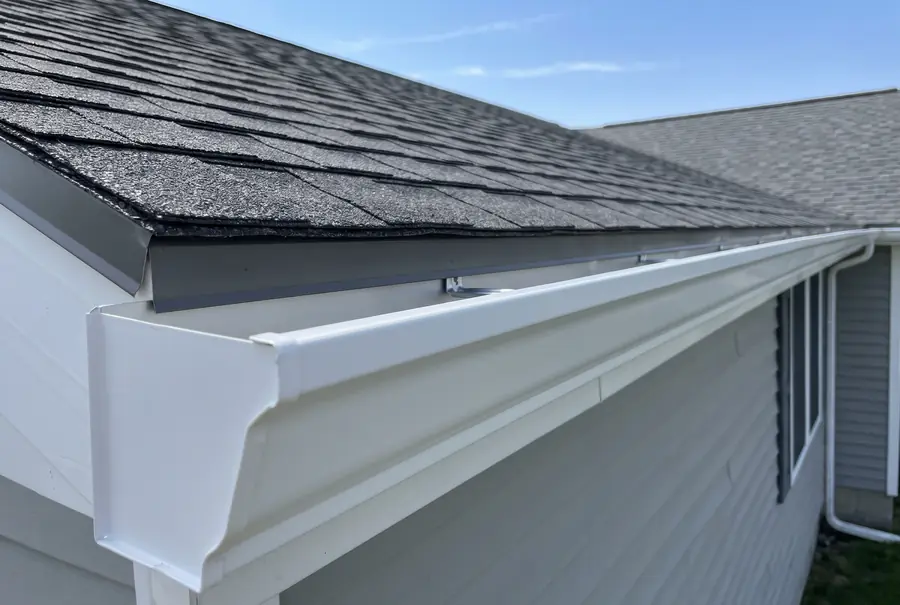
Duluth Gutter Group connects callers with independent local gutter contractors, who give the estimates and do the work. A seamless gutter has no joints along its length; a sectional gutter has one every 10 feet or so.
Comparison
| Sectional | Seamless | |
|---|---|---|
| Made | Fixed lengths | Formed on site to length |
| Joints | Every 10 feet plus corners | Corners and outlets only |
| Leaks | More likely as joints age | Fewer joints to fail |
| Metals | Vinyl, aluminum, steel | Aluminum, steel, copper |
| Hangers | Often clips or spikes | Hidden screw-in hangers |
| Look | Visible seams | Clean line |
| DIY | Common | Needs a forming machine |
Why joints matter in Duluth
Georgia summers bake gutters and winter nights still freeze. Each joint flexes as the metal moves, and wet pine needles collect at joints and hold moisture against the sealant. A 50-foot sectional run might have five joints; a seamless run has none along its length.
How a sectional system is put together
Lengths are joined with a connector or overlap, sealed and sometimes riveted. Corners, end caps and outlets are separate pieces. Hangers are often clips or spikes. A 40-foot run with two corners might have eight or nine sealed joints.
How long seams last
A joint sealed on clean, dry metal lasts far longer than one smeared over grit. South- and west-facing runs fail first. When one seam starts leaking, others of the same age are often close behind.
When sectional still makes sense
- Sheds and small outbuildings.
- DIY repairs to match an existing sectional system.
- Short runs.
Which is easier to repair?
| Repair | Sectional | Seamless |
|---|---|---|
| One leaking joint | Reseal or replace connector | Reseal corner or end cap |
| One damaged section | Swap a 10-foot length | Replace the run |
| Many leaks | Often replace | Rare |
| Matching color | Easy with stock lengths | Coil color may differ after fading |
Hangers make as much difference as seams
Many older sectional systems were hung on spikes, which back out. Seamless systems use hidden screw-in hangers about every 2 feet. If you keep a sectional system, re-hanging it on screw-in hangers is worthwhile.
Where you still see sectional gutters around Duluth
Sectional gutters show up on sheds, detached garages, some older ranches with do-it-yourself replacements, and occasionally on additions where a homeowner matched store-bought gutter to an existing run. On most whole houses in Duluth, builders used seamless aluminum from the 1980s on, so the question usually comes up when an older ranch or an outbuilding is being re-guttered.
Looks from the street
Seamless runs show a clean line along the eave. Sectional gutters show a joint every 10 feet, and on a long brick ranch that can look busy. Seams also collect dark stains where water seeps.
Cost comparison
Materials for sectional can look cheaper on the shelf, but installed by a crew, the difference shrinks. Published national guides put 5-inch seamless aluminum at about $9 to $13 a foot installed. Over the life of the gutter, fewer joint repairs usually favor seamless. See the cost guide.
Questions to ask
- Is the quote for seamless or sectional?
- How many joints will each run have?
- What hangers and spacing?
- How are corners joined and sealed?
Hangers make as much difference as seams
Many older sectional systems were hung on spikes, which back out over years of heat and cold. Seamless systems use hidden screw-in hangers about every 2 feet. Part of what owners notice after switching is not the missing seams but the gutter that stays straight. If you keep a sectional system, re-hanging it on screw-in hangers is worthwhile.
Seamless on outbuildings
Detached garages, workshops and large sheds can take seamless gutters too, formed on the same visit as the house. A short sectional run on a small shed is fine, but a seamless run on a large outbuilding avoids a row of joints.
Before you call
Look along each run for joints between corners. If you see one every 10 feet or so, the system is sectional. Count the leaking ones in the next rain. A few can be resealed; many point to replacement with seamless.
Seamless and guards
Guards sit more evenly on a seamless run, with no seams to create bumps or gaps. If you plan to add guards, fitting them with new seamless gutters is the cheapest time.
How long seams last
A joint sealed on clean, dry metal with good gutter sealant lasts far longer than one smeared over grit. South- and west-facing runs, which bake in the afternoon sun, usually fail first. When one seam on a sectional system starts leaking, others of the same age are often close behind, so a single leak is a good prompt to check the whole run.
The bottom line
For a whole house, seamless installed by a crew is the standard and usually the better value. Sectional suits sheds, small repairs and tight budgets. See seamless gutters.